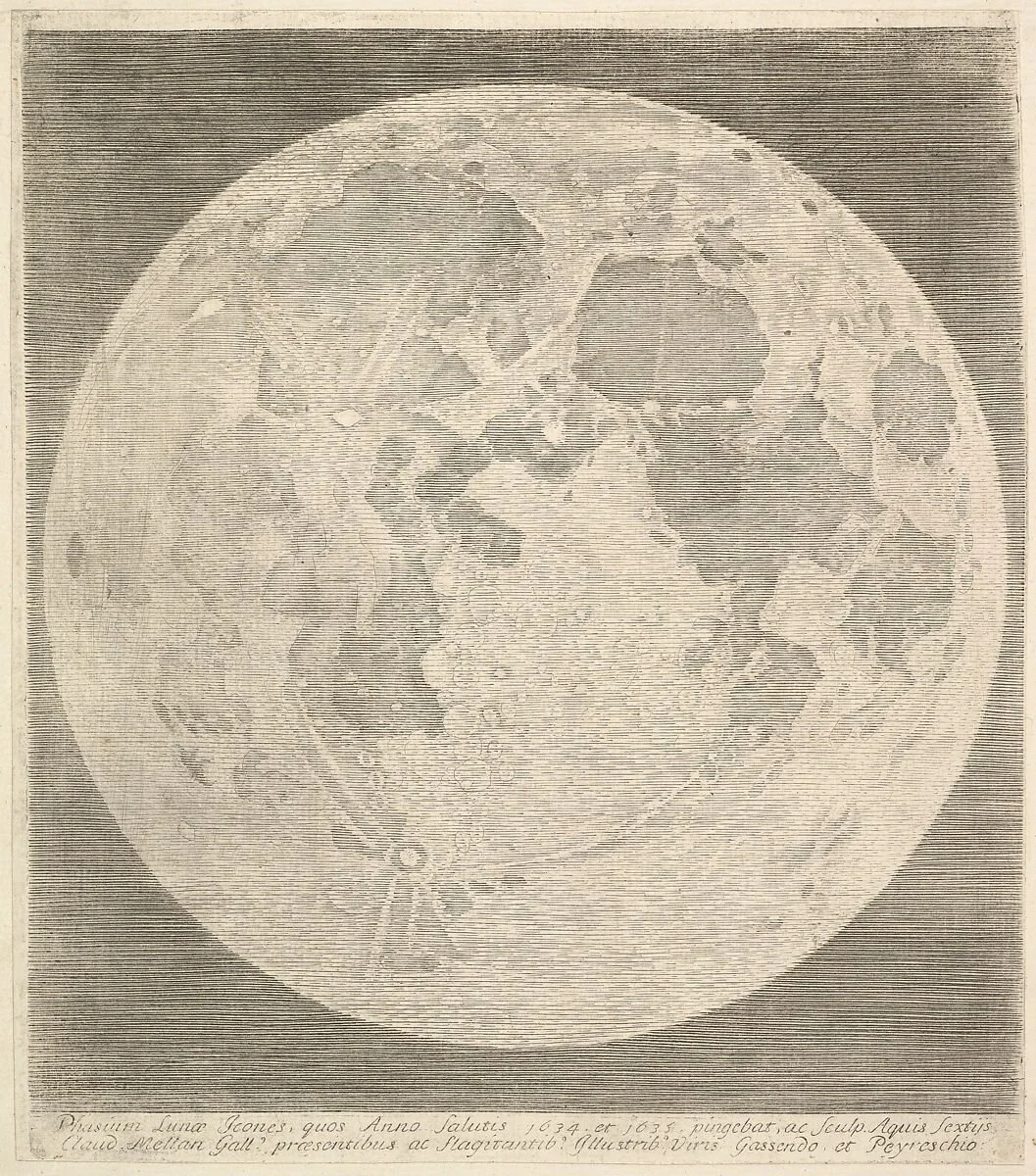
It’s nearly 57 years since man took his first step on the moon on July 20, 1969. And since 1971, the landmark event has been commemorated as National Moon Landing Day. Mans' curiosity to travel to the Moon showed no signs of letting up over the years— as I update this post Artemis II prepares for a take off for a trip to the other side of the moon (2 Apr 2026). So it's little wonder that Luna also intrigued our ancestors — but there's little doubt, it's impact and affect was well known by our forefathers. Today is also a Full Moon in Libra at 1:11pm in Sydney.
Perhaps peeps unaware of Luna's multitude of influence, won't be so quick to dismiss Moon superpowers after reading NASA's 2021 announcement relating to the regular wobble in the Moon's orbit. 'The combination of the Moon's gravitational pull, rising sea levels, and climate change will continue to exacerbate coastal flooding on our coastlines and across the world would have on tides in about 15 years' time.' It’s time to scratch the surface and learn how the celestial satellite of the night sky shapes the world we live in.
☽⃝ MOON PHASES
Let’s start with Phases. Luna’s craters are virtually visible with the naked eye from Earth - but we always see the same face of the moon - with the far side of the moon invisible from Earth - Artemis II attempts to tick this box. The phases of the moon are many, but normally broken into eight increments. On the day of the first Moon landing, Luna appeared in a Waxing Crescent Phase to viewers from Earth. It’s the first Phase after the New Moon and ideal to see the features of the moon's surface.
Phases occur because we see different amounts of Luna’s sunlit face, as she orbits Earth. The Earth’s gravitational pull slows the moon’s rotation so that it’s exactly synchronized with it’s orbit. The dark side of the moon, also known as the New Moon, happens when Luna is in total shadow. Then as the lunar lady orbits the Earth, the crescent moon shows her face and waxes from crescent to gibbous to Full Moon. At its brightest, Sol illuminates Luna’s fullest face to us Earthlings - note ‘moon beams’ are in fact ‘reflections’ on the moon - luna has no light to beam. As the Lunar lady continues to orbit, the moon phases wane from Waning Gibbous to Last Quarter to Waning Crescent and back to New Noon phase. Moon phases take 29.5days while the moon orbits earth in 27.5 days.
In summary as the moon orbits the Earth, its position relative to the Earth and Sun changes. When the Earth sits between the Moon and Sun, folks on Earth see a full moon at night. While a new moon occurs when the moon sits between the Sun and the Earth. New moons occur during the day - so we can't see them because of the sun's brightness.
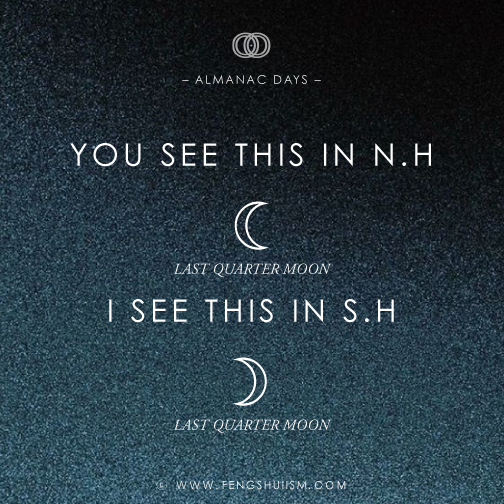
YOU SEE 'D' - I SEE 'C'
No matter where you're domicile Luna is currently Full (2 Apr, 2026) she then wane her way through phases to vanishing, invisible to earthlings but termed a New Moon. But from my patch of paradise here in the Southern Hemisphere Luna's waning phases is illuminates to reveal a ‘D’ ☽ shape as she D-ecreases and D-isappears on 17 April 2026. When I first moved to Australia from Europe, this phenomena was rather discombobulating. I was familiar with seeing the waxing phase as a 'C' ☾ shape. When I initially shared this experience, I was surprised how few Luna loving souls actually knew of this little known phenomena (even among some professional Astrologers).
So depending on which hemisphere you reside in, Luna’s face is lit up from a different angle. For anyone relocating Hemispheres this can initially be perturbing as most moon phase glphs are drawn from a N. Hemisphere perspective. An easy way to know which phase we’re in is to use the mnemonic C - O - D for S.H viewers and its D - O - C for N.H viewers.
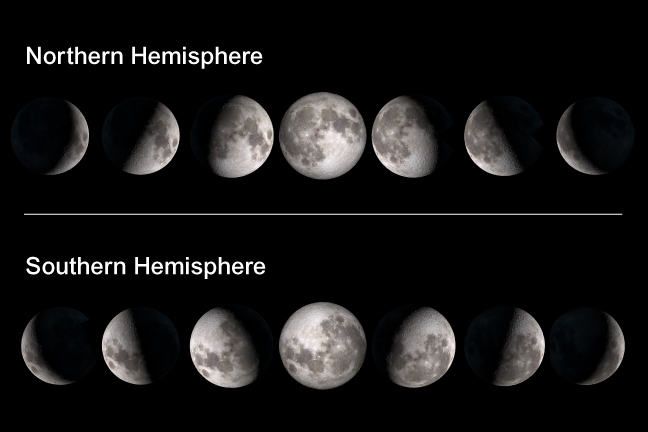
View of the Moon's phases from the Northern Hemisphere (top) and from a point at the same latitude in the Southern Hemisphere (bottom).
LUNAR & SOLAR CALENDARS
Moon has always been instrumental in influencing calendar makers since time immemorial with Mayan astrological architecture using lunar orientations. Even today’s Universal calendar (Gregorian) calculating Easter, as the first Sunday after the first Full Moon (lunar) occurring on or after the vernal equinox (solar influence). Moon even lends its name in part to ‘Monday’, derived from Middle English Monenday, originally a translation of Latin, meaning ‘day of the Moon’. In addition to being cognate with month and moon.
Prior to the Republic of China adopting the Universal calendar system in January 1912 - but, it wasn’t formally decreed until January 1929 - Chinese society used many different calendar cycles. Changing planetary movement creates energy patterns, which to the Chinese repeat in a 60year cycle. The Farmer’s Almanac or Tong Shu - and it’s common place in China combines both a solar and lunar calendar called the soli-lunar (Hsia). Lunisolar calendars combine lunar months (luni) and also measure the sun’s position (solar) on the celestial eclipse. Hsia calenders are still in use today; mainly written in Chinese, and a highly referenced bible of sorts for serious Feng Shui practitioners and the keen agricultural almanac users. My tool of choice for making my annual predictions.
In ancient times, only the ruling Emperor produced calendars and lunar calendar measured months and years according to lunar cycles while phases of the moon determined public festivals. A lunar year can have 12 or 13 months, the latter happens to ensure the Winter Solstice occurs in the 11th lunar month. Knowing this rule dictates the Chinese New Year, marked by the second new moon after the Winter Solstice.
When your vantage point from the Earth is tilted toward the sun, it denotes Spring and Summer seasons, and when your hemisphere is tilted away from the sun it’s Autumn and Winter. This is what differentiates seasons - the Earth's axis tilt on the ecliptic. Which in turn the Tong Shu applies to define 24 increments of seasonal nodes or more commonly known as the 24 Solar terms.
MOON PLANTING
Luna’s influence isn’t just confined to calendars and astrology, it also plays a role in gardening. But if you think Moon planting is gardening at midnight, then think again. It refers to Luna’s phases and astrological pairings to influence the successful growth outcome of plants. We know Luna is devoid of air or liquid water, which therefore means no weather, with an average temp. of minus 18degrees, yet it still affects weather lore in various indirect ways. As noted above, Luna effects the ebb and flow of ocean tides which in turn influences the atmosphere and effects weather. When the moon is full or indeed new, it creates a "bulge" in the ocean, which is why we have tides. According to Sciencing, ‘tides affect the movement of ocean currents, which affect the weather through the amount of warming or cooling water moving through a given area. . . . . . water temperature combines with wind strength and direction to define the duration and strength of weather events like the El Niño.’
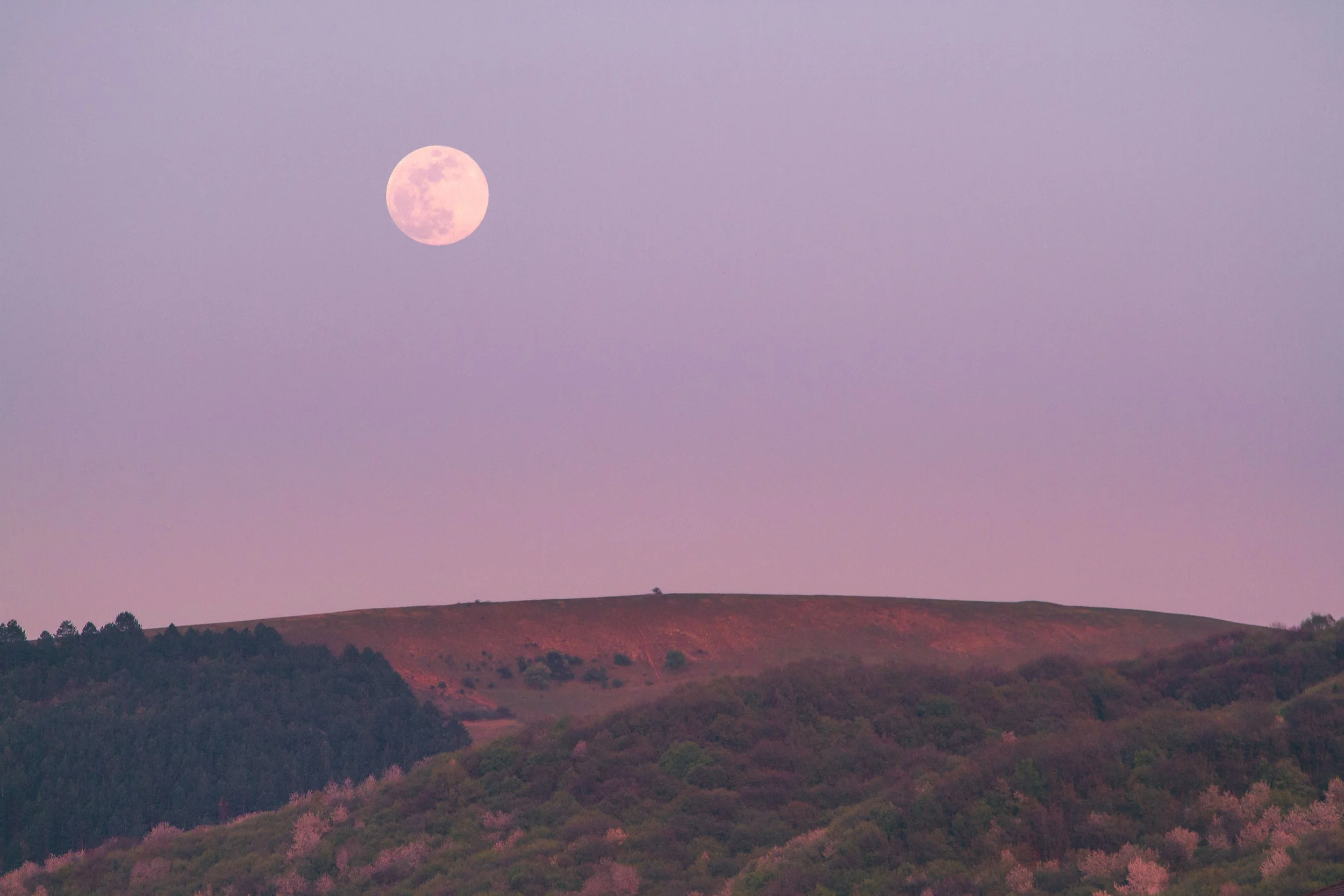
Tidal forces also affect solid land, albeit less than they affect water, so Luna affects the height of the land. And the moons gravitational pull influences the moisture in the soil - it’s at its strongest pull when Luna is in a Waxing phase and growing in reflective moonlight, from New to second Quarter.
When Moon phases are paired with Zodiac signs a very specific gardening guide can be adhered to with predictable results. For example, it’s considered best to plant crops which produce produce above ground by a waxing Moon or below ground crops by a waning moon. Coupled with the astrological sign these dictate various tasks like when luna is transiting through the sign of Aries, seeds will be quick to germinate and go to seed. The zodiacal sign of Cancer is governed by the moon and a host of plants are also aligned with moon energies. The lunar ways of planting by the moon resulted in the trusty Farmer’s Almanac and the Chinese version is the aforementioned Tong Shu (Chinese Almanac/ Farmer’s Almanac).
MOON GROOMING
Our bodies are also influenced by the Moon. Women menstruate according to Luna’s cycle length and everyone’s bodily fluids are also influenced. Some folk also use electional astrology for scheduling Medical procedures as - the phase and astrological sign union, influence certain surgeries; when the body part relates to the Zodiac sign it forebodes success outcomes and the phase also plays a role. Cutting, washing, colouring, perming, waxing and shaving one’s bodily hair also falls under the remit of Luna.
LUNAR BIRTHDAY
Luna offer us a chance to celebrate our birthday twice! In astro speak, our more common birthday is celebrated on your Solar Return - i.e. where the sun was positioned when you were born. But we also have a 'Lunar' birthday. Great news for folks that love extending their birthday's into week long festivals!
And finally, if Artemis II has a successful take off (there’s no landing on moon for this trip) It will happen on a double Fire horse pillar - Day and Year duplicate. Fire Horse is associated with Sun’s solar rays. The month pillar is Rabbit - strongly associated with Lunar lore and surrounded by yang solar power. 2026 and current Age of Fire has strong Space Race themes. You can read my 2026 annual predictions in Wellbeing astrology magazines. - here and here.
ⓒ FENG SHUi iSM 2026 - first written July 2019 - updated 2026
“Living eye to eye with environmental wisdom ”