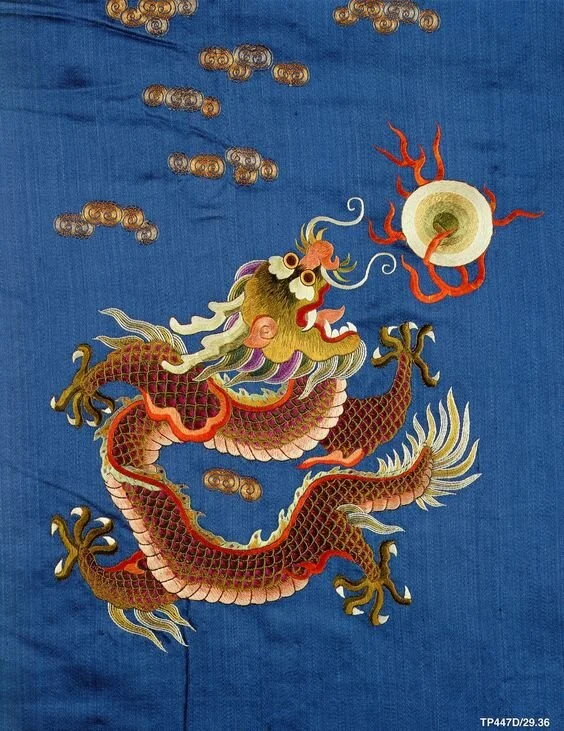
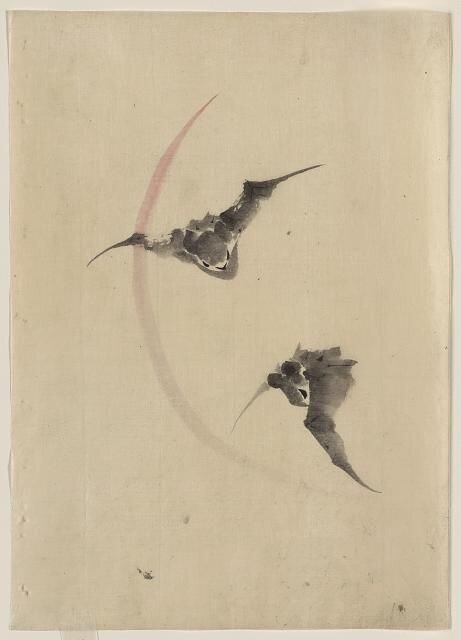
Sol and and Luna’s allure have captivated nations and cultures since the dawn of time. And the mystical obscuring of either celestial body’s illumination continues to beguile us today. In times past, the phenomenon of eclipses must have been scary when playing out in our skies. We’ve unpacked the cosmology and folklore behind the ominous occurrences. And the upcoming New Moon marking the Fire Horse’s entrance is solar ring of Fire Eclipse on 17 Feb 2026!
Read moreCHINESE NEW YEAR'S EVE - Chuxi
IIf January’s New Year resolutions have fizzled out, tune into the Chinese Lunar New Year as the Year of the Fire Horse makes its final transition on 17 Feb. 2026. Lunar New Year follows Moon (Luna) cycles therefore commencing under a New Moon. The upcoming lunation is the second New Moon AFTER the Winter Solstice which dictates the beginning of the Lunar New Year. It also kick starts the more widely known and celebrated of the Lunar New Year festivities - beginning a two week long Spring Festival. Li Chun is a Solar Festival marker which occurred on 4 Feb 2026 seeding the Chinese Solar New Year and Fire Horse official debut.
Read moreImbolc

- REPOSTED 2026 with updated CYN dates - FOR THE OPPOSING FESTIVAL OF LUGHNASADH SEE HERE + A WHEEL OF THE YEAR OVERVIEW HERE
At Imbolc, we celebrate the polarity seasons once more. It seems like yesterday we were celebrating the Solstices (Winter in Oz and Summer in the N. Hemisphere) but it was only roughly six weeks ago! Imbolc celebrates the Return of Spring. Nature's cues come with the sprouting of saffron crocuses, snowdrops or new tree buds. The first born offspring begin to appear - even the term 'Off spring' meaning 'OF' Spring references the season we herald in.
Honouring Tradition
Traditional Celtic festivals are pivotal points in the Celts calendar, marking a time to reflect on the season past and what the future season will hold. Of course they represent a time of year - not a particular date, with Seasonal Fairs celebrating calendrical points in time, at sacred places. The sacred landmarks, waterways, temples or megalithic structures, often heralded an astronomical event bringing attention to the two main luminaries in the sky - Sun and Moon. The four cardinal points of year marked by pairs of Solstices and Equinoxes and combine with the four cross quarter divisions to create the eight solar divisions - Imbolc (31 Jan-2 Feb.), Beltaine (30 April-2 May), Lughnasa (31 July - 2 Aug.) and Samhain (31 Oct -2 Nov.). In fact the origins of the Pagan calendar are believed to be lunar but appeared to have adopted the solar calendar around the time of Christianity, when Christian traditions celebrate Candlemans (Imbolc), May Day Virgin Mary (Beltaine), Lammas (Lughnasa), All Saints Day (Samhain) and Yule as Christmas — arguably the most Christianised of them all.
IMBOLC
(N.H 31 Jan - 2 Feb OR S.H 31 Jul - 2 Aug)
Noting in the Southern Hemisphere the eight seasonal markers are flipped. Therefore the early Feb is an Autumnal time Downunder and denotes – Lammas or Lughnassadh. While in my homeland of Ireland it’s the opposing festival that my fellow country men & women celebrate in the month of February - Imbolc – Springtime. But most Australian’s follow school curriculum the Seasons as defined by grouping the Universal calendar months; February is the last month of Summer, grouped with Dec and January. While Autumn begins in March and ends in May. S.H Wicca/Pagan devotees observe this Festival marker and see between 31 Jul - 2 Aug as the end of one season and the beginning of the next.
Imbolc (or Imbolg) is a Celtic name, that translates as ‘in the belly’ or some say ‘ewe’s milk’. Since the 9th Century, it’s was also known as Candlemas, when the Pope abolished the Pagan Festival and marked instead the ‘Feast of the purification of the Blessed Virgin’ on 2 Feb., when candles were lit in her honour. The Celtic Goddess Brigid is also made reference and once again the Pagan is dethroned with Christianity and Goddess Brigid morphed and venerated on the 1 Feb as St. Brigid’s Day. I’m silently impressed Ireland has chosen to celebrate a female Goddess on 1st February as a National Holiday since 2023 (more this below).
Groundhog day (Feb 2) is a traditional weather omen custom in the U.S and Canada, and traditionally also observed by German communities. Weather lore is closely linked to animal lore to denote the seasons. It’s said if the Hog emerges from its burrow on this day and sees a shadow due to clear weather, it will retreat to its den and Winter will persist for six more weeks ( that’s approx when the next Festival marker would begin and the season established (see previous post on Ostara for more info on the three methods /customs used to marking a season). And indeed in the Chinese Calendar system seasons commence approx six weeks (1½ months) before the comparative seasons in the Western Calendar. Noting in 2024, Groundhog day denotes an early spring.
In the case of Ancient China, their UNESCO recognised Solar Calendar is broken into 24 Seasonal Markers aka the 24 Solar Terms – with two markers each month. Hailing from the Chinese agricultural Almanac (Farmer’s calendar), 12 markers indicate the beginning of each month and 12 mark the mid point of the month. A calendar year begins at the ‘Start of Spring’ which occurs in February in the Chinese Solar Calendar. The beginning of the Chinese Lunar New Year fluctuates according to the second New moon after the Winter Solstice. So February is classed as the 1st month of the year. While August is the 7th month in the Chinese calendar and it corresponds to the seasonal markers ‘Coming of Autumn’ and ‘End of Autumn Heat’.
MARKING THE DAY
Festivals then and now, are celebrated with song and dance, although the dances and customary feasts were ritualistic in nature in times past. Whatever seasonal produce was in abundance graced the feast tables and sacred herb buds were gathered. And like all festivals, Fire purification ceremonies are the common denominator. Fire festivals are a Major Sabbat in Wiccan, Pagan, Celt and Druid fraternities, and were not just a single day markers; but a three day event, from sunset on 31 Jan - sunset on 2 Feb. Sunset is when a Celtic Day begins.
Imbolc is all about birthing what has gestated in winter. Milk was abundant from lactating animals, hence the reference to Imbolc (Im, is Irish for butter). So honouring dairy produce is an ideal way to honour this festival marker.
Last year (2023), also kick start an official holiday in Ireland on 1st Feb. for St Brigid or Lá Fhéile Bríde to honour the Saint. As an alumna of a St. Brigid’s school the festival is indelibly marked with the making of St. Brigid crosses! The fresh green reeds are pulled (not cut) to fashion a ‘cross’. Of course it resembles a Christian cross, but the (✚)symbol in more ancient times was a ‘sun wheel’ marker - which is what the Celtic/Pagan Calendar visually depicts. The Goddess Brigid was also closely venerated for her artisan craft skills — especially silversmithing and weaving — the rush made crosses, are essentially basic weaving techniques.
Visiting wells and honouring water streams spirits was also a tradition, although the word ‘holy’ is now a prefix to ‘well’, since Christian times. As the festival is also linked to Candlemas there is a strong linking to light and candles. So perhaps a simple lighting of candles or trying your hand at making some ethical candles could honour the day.
PURIFICATION + CROSS CULTURAL CUSTOMS
Since Fire Purification and cleansing is so closely linked to new beginnings and getting ready for the new season, it's an ideal time to spiritually cleanse and space clear your home or perhaps re arrange your furnishings - in accordance with Feng Shui.
The opposing cross quarter festival marker — Imbolc — when celebrated in the Northern hemisphere falls in February and technically correlates to the beginning of the *Solar Chinese New Year (CYN). Like Chinese Cultural customs who favour and emphasis Midpoints the Celtic Cross Quarter festivals are midpoints between Solstices and Equinox which are solar observations. The ‘Spring Festival’ marker is the 1st solar marker of the year in the 24 Solar Terms system of correlating Seasonal nodes and the incremental adjustments throughout the year. In the main this date slightly fluctuates and it’s sols degree on the celestial equator that dictates the timing. If the degree occurs after 12 midnight, when a New Chinese day commences (in Rat hour) the the date shifts. Dates fluctuate between Feb 4-5 and sometimes 3 Feb. (4 Feb 2026)
Preparation for the CYN is traditionally very focused on Spring cleaning, cleansing your home, honouring various deities, removing last year’s energies and preparing for the Earth Luck in coming new year.
And if you’re lucky enough to be in the Emerald Isle, then take a visit to Co. Meath. In Meath, a place called Tara has long been linked to the Ireland’s High Kings. The Neolithic Mound of the Hostages (Dumha na nGiall), an ancient passage tomb built in 3350 and 2800BC is located in the Tara-Skryne Valley. The dome structure mound has a short passageway that is aligned to cross-quarter days in November and February, corresponding to the rising sun illuminating the inside of the mound during Samhain and Imbolc.
You can find more info on our Space Clearing or Feng shui consultations to help you capitalize on the prosperous energies of the year. We ushered in the Chinese Lunar New Year 17 Feb 2026 and the Chinese Solar New Year happens in a few days prior on 4 Feb. 2026. STAY TUNED FOR MORE New Year insights ⧇
* NOTES - The more well known beginning of the Chinese lunisolar Calendar is Lunar New Year (CLNY). The Chinese calendar follows Luna and Solar cycles - it’s a magical system with many calendrical calculation rules - one of which is the Winter Solstice (Dec) falling in the 11th Lunar Month, and then the Second New Moon after the Solstice indicates the beginning of a Chinese Lunar New Year, fluctuating due to Luna’s cycles. But the Solar New Year is more stable so when the Sun reaches the celestial longitude of 315° Li Chun aka ‘Spring begins’ and a New Solar Year. In the Gregorian Calendar (universal world calendar) this is normally between 4-5 Feb.
“Living eye to eye with ancient wisdom ”
— FENG SHUi iSM
ⓒ FENG SHUi iSM 2018 - updated 2026
Before Kondo, there was Kingston
I’ve remained tight lipped about the Kondō convos for a while now. But I’ve been prompted to chime in from a Feng Shui perspective.
Disclaimer, I’ve not read The Life-Changing Magic of Tidying Up book by Marie Kondō but I’ve watched her Netflix series and encountered the KonMari social media frenzy. Admittedly, I tend to rebel against mainstream crazes, but when conducting my own personal annual preparations for the Solar New Year on Feb. 4th (not to be confused with Chinese Lunar New Year) I decided to check out the best selling author.
Read moreMISTLETOE , DRUIDS, JUPITER & SATURN
I’ve been musing…. and it’s led me to Mistletoe’s door. Are we entering the Age of Mistletoe or The Return of the Druids? Mistletoe, the little freeloading plant that has remarkably synchronicities and on point themes that weaves a symbolic narrative of the prevailing astro weather. Even main stream media covering the cosmic skies with chatter of the Great Conjunction between Jupiter and Saturn; exact back on the December Solstice in 2020. My mistletoe musings unearthed some fascinating lore, far more interesting than stolen kisses, dare I say. And if we were living in bygone times the Xmas staple would be the Ancient’s secret weapon to this current health situation.
Read moreCHRISTMAS GIFT VOUCHERS
Seasonal Greetings to one and all.
This year give a gift with meaning. If you’re drawing a blank when it comes to choosing the perfect seasonal gift, then we've got an awesome suggestion. Give the gift that keeps on giving Good Sheng Qi - positive, prosperous abundant vibes.
Read more